The Virginia Supreme Court now stands at the center of a high-stakes constitutional showdown over a voter-approved congressional redistricting map that dramatically shifts partisan advantage toward Democrats. The court’s upcoming decision could invalidate a map drawn by an independent citizens’ commission and backed by a statewide referendum, reigniting debates over judicial power, democratic intent, and fair representation.
This isn’t just another redistricting dispute—it’s a direct test of whether a reform-driven electorate can override entrenched political machinery through ballot initiatives. With 11 U.S. House seats on the line, the implications stretch far beyond state borders, influencing national party balance and setting a precedent for how courts interpret voter sovereignty in redistricting.
The Origins of Virginia’s Redistricting Reform
Virginia’s current redistricting crisis stems from years of partisan gerrymandering. For decades, control of the state legislature meant control over congressional maps, with both parties taking turns drawing districts that protected incumbents and minimized competition. By the 2010s, public frustration peaked. Advocacy groups, good government coalitions, and bipartisan reformers pushed for structural change.
In 2020, voters approved a constitutional amendment creating the Virginia Redistricting Commission—a 16-member body split evenly between legislators and citizens. The goal was clear: remove direct partisan control and give map-drawing power to a more balanced, transparent process. The commission was tasked with producing both congressional and state legislative maps, subject to legislative approval or override.
What followed, however, was legislative gridlock. The commission deadlocked along partisan lines, unable to agree on a final map. Under the amendment’s provisions, the responsibility then fell to the Virginia Supreme Court, which in 2021 appointed a special master to draw the initial maps. That set a precedent: judicial intervention as a default when politics fail.
How the Current Map Favors Democrats
The map now under scrutiny was approved by voters through a 2023 referendum that bypassed the legislature entirely. It emerged from grassroots efforts after reformers argued the court-drawn 2021 map still contained Republican-leaning distortions. The new map reconfigures several key districts, particularly in Northern Virginia, Richmond, and Hampton Roads, consolidating Democratic strongholds and creating more competitive, urban-suburban hybrid districts.
Key changes include: - Merging parts of Fairfax and Loudoun counties into a single, more Democratic-leaning 10th District. - Redrawing the 4th District around Richmond to increase Black voter influence, aligning with Voting Rights Act principles. - Stretching the 2nd District along the coastal region to connect Norfolk, Virginia Beach, and parts of Hampton, creating a potential pickup opportunity for Democrats.
Analysts from the Princeton Gerrymandering Project and the Center for Politics at the University of Virginia rated the new map as “Democratic-favoring” but “moderately fair” in geographic compactness and community integrity. Still, Republicans argue it dilutes rural representation and concentrates GOP voters into fewer districts—a classic sign of reverse gerrymandering.
Why the Court Is Being Asked to Block It
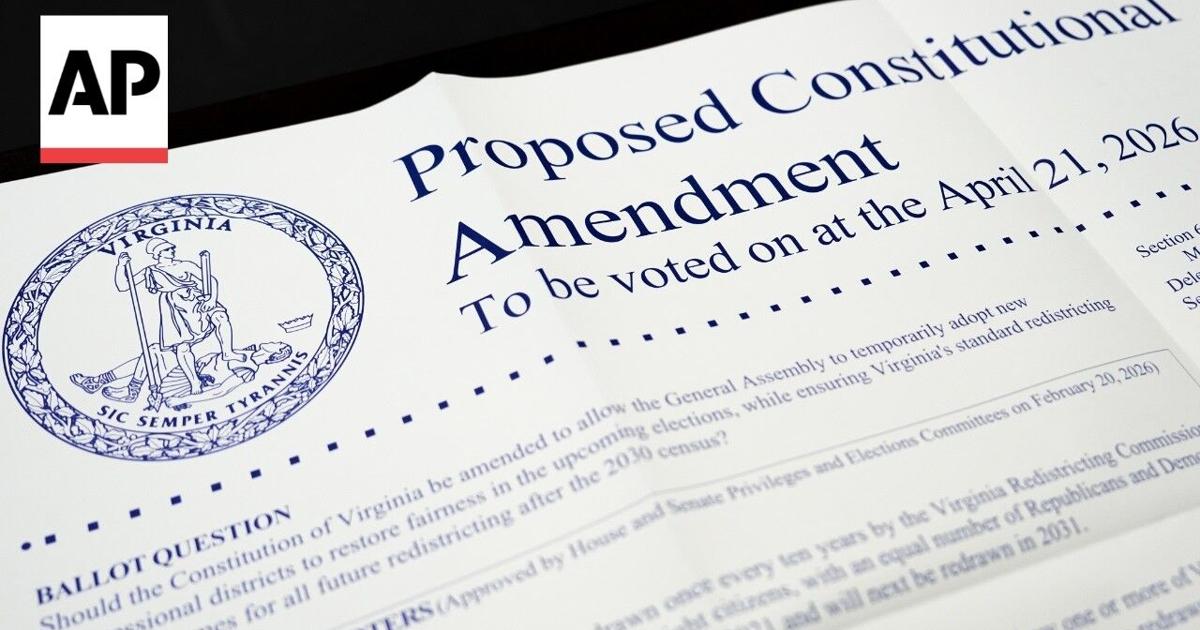
The legal challenge comes from a coalition of Republican voters and state lawmakers who claim the map violates the Virginia Constitution’s requirements for districts to be “continuous,” “compact,” and reflective of “communities of interest.” They argue the new boundaries arbitrarily split counties and cities—particularly in Loudoun and Prince William—without justification.
More fundamentally, they challenge the legitimacy of the referendum process itself. Their core argument: only the General Assembly has constitutional authority to adopt congressional maps, and a citizen-led ballot initiative cannot override that power. This raises a thorny question—can voters amend procedures through referendum if the constitution doesn’t explicitly allow it?
Legal precedent in Virginia is thin on this issue. While states like California and Michigan have long empowered voters to create redistricting commissions via ballot measure, Virginia’s constitutional structure is more legislative-centric. The court’s decision will hinge on interpreting Article II, Section 6, which outlines redistricting authority but doesn’t explicitly mention voter initiatives.
The Stakes for Democratic Representation
At its heart, this case is about who gets to define fairness in representation. Proponents of the voter-approved map argue that the people, not politicians or judges, should have the final say—especially after years of broken promises and partisan deadlock.
“Virginia voters didn’t just approve a map,” said Del. Irene Lopez, a co-sponsor of the referendum resolution. “They approved a process. They said, ‘We’re tired of the games. Let’s draw lines that reflect real communities, not safe seats.’”
The map has already shown political impact. In hypothetical 2024 election models, Democrats gain a net of 1 to 2 additional seats under the new configuration, turning what was a 6–5 Republican advantage into a potential 7–4 Democratic edge. That shift could influence national control of the U.S. House, especially in a closely divided Congress.
But critics warn of unintended consequences. Some good-government groups, while supportive of reform, caution that frequent map changes—especially mid-decade—create instability and confuse voters. “Redistricting shouldn’t be a tool for political recalibration every few years,” said Meredith McBride of the Virginia Public Access Project. “We need durable standards, not shifting sands.”
Judicial Precedent and Past Court Actions
The Virginia Supreme Court’s past actions in redistricting offer mixed signals. In 2021, the court upheld maps drawn by a special master after the commission failed, citing the constitutional mandate to ensure timely maps. That decision was widely seen as pragmatic, avoiding election delays.
But the court has also shown a willingness to strike down maps it deems unconstitutional. In 2019, it invalidated 11 state legislative districts over racial gerrymandering claims, reinforcing its role as a check on political power. Yet those cases involved clear violations of the Equal Protection Clause; the current dispute is more about procedural authority than constitutional rights.
Legal scholars note a critical difference: past interventions addressed maps already in use, whereas blocking a voter-approved initiative would mean overriding direct democracy. “This is uncharted territory,” said Dr. Aaron Kessler, a constitutional law professor at William & Mary. “If the court blocks this map, it’s not just correcting a procedural error—it’s nullifying a mandate from millions of voters.”
What a Block Could Mean for Future Reforms
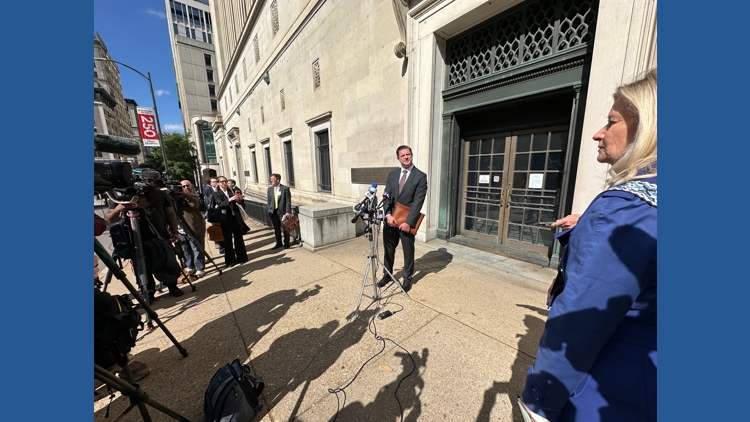
A decision to block the map could have chilling effects on citizen-led democracy in Virginia. If the court rules that only the legislature can adopt congressional maps, it effectively closes the door on future ballot initiatives in redistricting—no matter how broad the public support.
That could embolden lawmakers to delay or sabotage commission efforts, knowing the judiciary may ultimately side with institutional authority over popular will. It could also discourage similar reform movements in other states watching Virginia’s experiment closely.
Conversely, upholding the map would affirm that voters can intervene when political bodies fail. It would set a precedent allowing direct democracy to serve as a backup mechanism—a powerful tool in states with entrenched partisan legislatures.
But it also risks politicizing the court. If the justices are seen as enabling a Democratic advantage, Republicans may push for court-packing or jurisdictional limits in retaliation. The danger isn’t just legal—it’s institutional.
Practical Implications for Voters and Candidates
For Virginia residents, the outcome will affect who represents them in Congress and how competitive their elections are. In redrawn districts like the 10th, voters in fast-growing suburbs may see new candidates, new campaign priorities, and increased national attention.
Candidates are already adjusting. Democratic strategists are eyeing the 2nd and 7th districts as pickup opportunities, while Republicans are preparing for tougher races in Northern Virginia. Fundraising priorities are shifting, and party infrastructure is being retooled.
Local election officials, meanwhile, face logistical challenges. If the court blocks the map late in the cycle, it could force emergency redistricting, delay candidate filings, and create confusion in voter registration systems. “We need certainty by January,” said Anita Patel, elections director in Fairfax County. “Last-minute changes risk errors, misinformation, and lower turnout.”
A Decision That Could Reshape State Democracy
The Virginia Supreme Court’s ruling won’t just determine the shape of 11 congressional districts—it will define the balance of power between voters, legislators, and judges in one of the most contested areas of American democracy.
If the court blocks the map, it sends a message that structural change must come through the legislature, no matter how dysfunctional it may be. If it allows the map to stand, it affirms that voters have the right to correct political failures through direct action.
Neither outcome is clean. Both carry risks. But in a state long plagued by partisan manipulation of district lines, the pressure to deliver a fair, durable solution has never been higher.
The decision is expected within the next 90 days. When it comes, it will mark not just the end of a legal battle—but the beginning of a new chapter in Virginia’s struggle for representative government.
What Comes Next: A Path Forward
Virginia cannot afford to repeat this cycle every decade. Regardless of the court’s decision, lawmakers and citizens must work together to clarify redistricting rules, define the role of voter initiatives, and establish independent oversight that doesn’t rely on judicial bailouts.
One viable path: amend the constitution to explicitly authorize voter referenda on redistricting. Another: strengthen the commission’s conflict-resolution mechanisms to prevent future deadlock. Transparency tools—like public mapping software and real-time feedback portals—can also empower communities to shape boundaries from the start.
The goal isn’t just fairer maps. It’s a system where no single branch or party holds a monopoly on representation. That’s the promise of democracy—and the real test Virginia now faces.
FAQ
What should you look for in Virginia Supreme Court Weighs Fate of Voter-Approved House Map? Focus on relevance, practical value, and how well the solution matches real user intent.
Is Virginia Supreme Court Weighs Fate of Voter-Approved House Map suitable for beginners? That depends on the workflow, but a clear step-by-step approach usually makes it easier to start.
How do you compare options around Virginia Supreme Court Weighs Fate of Voter-Approved House Map? Compare features, trust signals, limitations, pricing, and ease of implementation.
What mistakes should you avoid? Avoid generic choices, weak validation, and decisions based only on marketing claims.
What is the next best step? Shortlist the most relevant options, validate them quickly, and refine from real-world results.