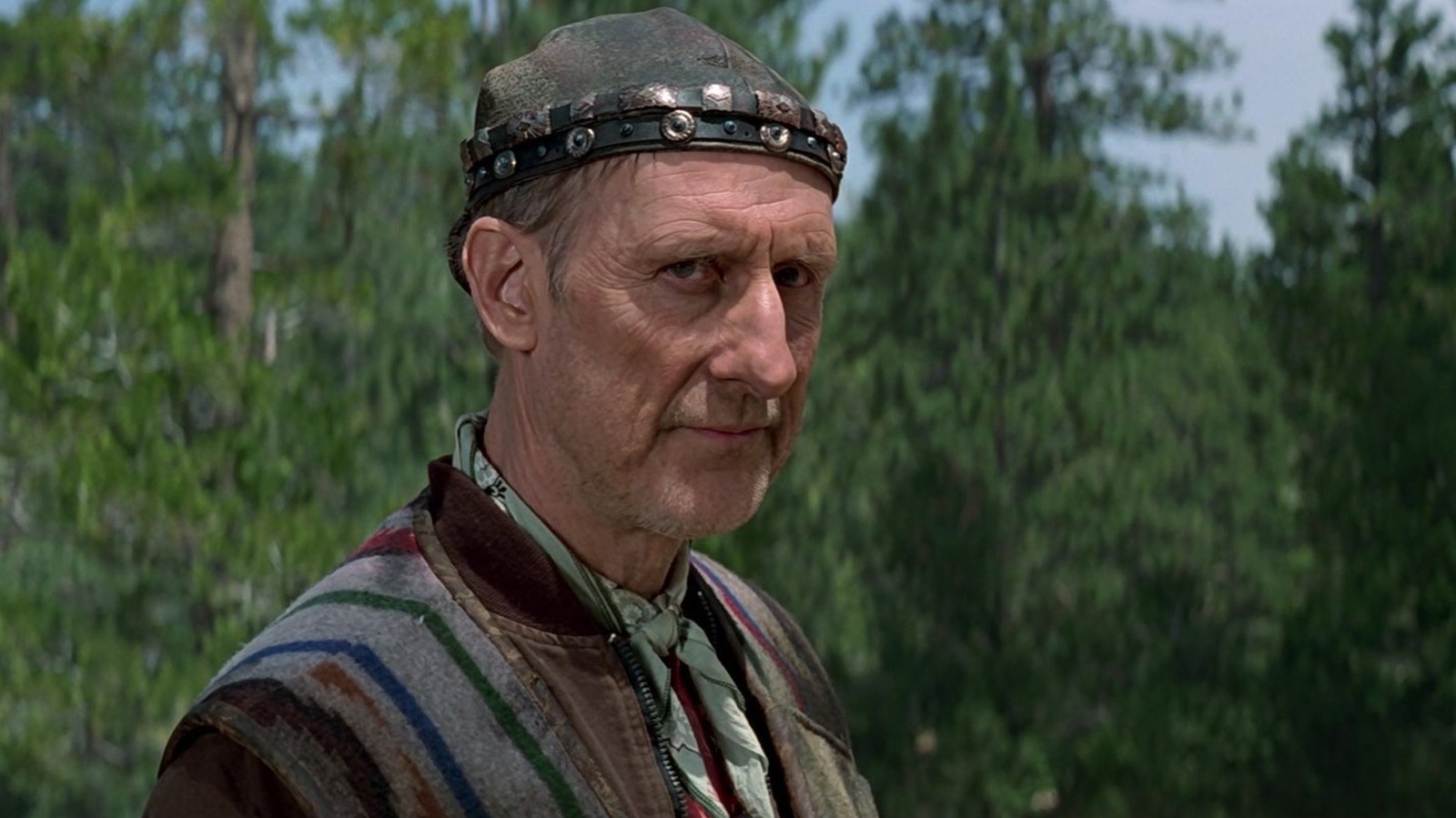
When audiences watch Star Trek: First Contact, they’re immersed in a meticulously crafted future—warp drives, cybernetic threats, and humanity’s first handshake with an alien species. But one cast member brought something most actors don’t: firsthand experience with real-life extraterrestrial studies. That person is James Cromwell, who portrayed Zefram Cochrane, the brilliant but reluctant inventor of Earth’s warp drive.
What many don’t realize is that Cromwell’s casting wasn’t just about performance range or studio preference. His personal engagement with questions about extraterrestrial life and government transparency played a role in how he approached—and was chosen for—the part. While he wasn’t cast solely because of his beliefs, his genuine interest in UFO phenomena and advocacy for disclosure added depth to his portrayal and resonated with the film’s thematic core.
This isn’t science fiction fantasy—it’s a rare case where real-world inquiry into alien life influenced a pivotal sci-fi role.
James Cromwell: Actor, Advocate, and UFO Enthusiast
James Cromwell is no stranger to roles that challenge the status quo. From The Green Mile to Still Mine, he’s built a career on portraying complex, morally grounded men. But off-screen, Cromwell has long been vocal about topics that sit at the edge of mainstream discourse—especially the existence of extraterrestrial intelligence and the alleged cover-ups surrounding it.
Unlike many celebrities who dabble in conspiracy theories, Cromwell’s interest is rooted in advocacy and inquiry. He’s spoken at conferences, supported disclosure initiatives, and even narrated documentaries on UFO phenomena. His 2013 narration of Sirius, a film exploring government secrecy around UFOs and advanced propulsion technology, revealed a deep personal investment in the subject.
That level of engagement didn’t go unnoticed by Star Trek: First Contact’s creative team.
Why Authenticity Matters in Sci-Fi Casting
Sci-fi thrives on suspension of disbelief. The better the audience believes in the world, the more impactful the story. And one way to enhance believability is to cast actors who, in some way, embody the themes of the narrative.
Zefram Cochrane isn’t just a scientist—he’s a symbol. A man who, hungover and cynical, launches humanity into the stars almost by accident. His character arc mirrors the real tension between scientific skepticism and revolutionary discovery. Casting someone like Cromwell—whose real-life curiosity about alien life parallels Cochrane’s role as a pioneer—added an invisible layer of authenticity.
It wasn’t just about lines or costume. It was about energy.
When Cochrane looks up at the sky and sees a Vulcan ship for the first time, there’s a quiet awe in Cromwell’s performance. It’s not overacted. It feels earned. And that’s partly because the actor himself has spent years contemplating that exact moment—what it would mean for humanity to finally know we’re not alone.
The Intersection of Belief and Performance
Cromwell didn’t land the role because he believes in UFOs. He got it because he’s a skilled actor with decades of experience. But his personal views undeniably shaped how he played Cochrane.

Consider the scene where Cochrane meets the Vulcans. The script calls for wonder, disbelief, and reluctant acceptance. Cromwell delivers it not with wide-eyed naivety, but with the cautious optimism of someone who’s spent years asking, “What if?”
That nuance matters.
Other actors might have played Cochrane as a caricatured mad scientist or a wide-eyed idealist. Cromwell made him human—flawed, skeptical, yet open to the impossible. It’s a performance that feels grounded because, in a way, it is grounded. His real-life advocacy for transparency in UFO research mirrors Cochrane’s role as a truth-seeker in a world unready for revelation.
Hollywood’s Quiet Relationship with UFO Culture
Star Trek: First Contact wasn’t the first sci-fi project touched by real-world UFO interest—and it wouldn’t be the last.
For decades, Hollywood has danced around the line between fiction and the unexplained. Studios avoid overt endorsement of UFO claims, but they frequently pull from the same cultural well: government secrecy, advanced technology, and the fear of the unknown.
What makes Cromwell’s involvement notable is that he brought that subculture into the production—not as a stunt, but as a lived perspective.
Compare this to actors like Sir Patrick Stewart or William Shatner, who’ve expressed curiosity about space and technology but haven’t engaged deeply with UFO research. Or contrast it with figures like Steven Spielberg, who’s hinted at personal UFO encounters but works from the director’s chair, shaping myth rather than living it.
Cromwell is different. He’s both inside and outside the narrative. On screen, he’s Cochrane—the man who made first contact possible. Off screen, he’s someone asking why our world hasn’t had that moment yet.
Behind the Scenes: Did the Studio Know?
There’s no public record indicating that the First Contact casting directors sought out actors with UFO research backgrounds. The decision to cast Cromwell was likely based on his acting pedigree, availability, and fit for the role.
But intention isn’t everything. The impact remains.
Even if the studio didn’t hire him because of his extraterrestrial interests, those interests informed his preparation and performance. And in turn, they enriched the film’s authenticity.
Imagine if Cochrane had been played by an actor indifferent to space exploration or alien life. The speech about “not being alone” might have felt routine. Instead, Cromwell delivers it like a eulogy and a prophecy—weighted with meaning.
That’s the power of lived belief in storytelling.
Real-World Parallels: Science Fiction as a Mirror
One of the great strengths of Star Trek has always been its ability to reflect real-world issues through speculative fiction. Climate change, war, inequality, AI—these are all examined through alien encounters and futuristic tech.
Now, add UFO disclosure to that list.
With the U.S. government releasing declassified UFO (now UAP) reports and Congress holding hearings on unexplained aerial phenomena, the line between Star Trek and reality is thinner than ever.
Cromwell’s dual identity—as actor and advocate—makes him a bridge between those worlds. When he says in interviews that “the truth is being suppressed,” it’s not a soundbite from a press junket. It’s a viewpoint shaped by years of research and conviction.
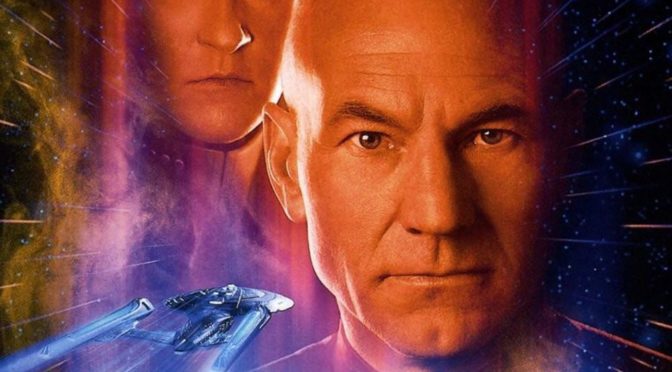
And when he plays a man who changes history by making contact, it carries extra resonance.
The Legacy of a Role That Felt Real
More than two decades after its release, Star Trek: First Contact remains one of the franchise’s most beloved films. Much of that success comes from its tight script, strong visuals, and emotional core.
But part of it—however intangible—comes from casting. James Cromwell didn’t just play Zefram Cochrane. He embodied the idea that discovery begins with doubt, and that the first step toward the stars might come from someone who’s asked, “What if we’re not alone?”
That question isn’t just science fiction. For Cromwell, it’s a life’s work.
And that’s why his performance still lands.
Lessons for Casting and Storytelling in Sci-Fi
The takeaway isn’t that every sci-fi role should go to a UFO researcher. But there’s value in casting actors who believe in the world they’re portraying—even if their belief exists off-screen.
Authenticity isn’t just about costumes or sets. It’s about the subtle cues: eye movement, tone, silence. These are things no script can fully dictate. They come from the actor’s inner life.
For filmmakers and writers, the lesson is clear: when building stories about alien contact, consider who’s telling the story—on and off camera. An actor’s real-world perspective can elevate a performance from competent to transcendent.
For audiences, it’s a reminder that sometimes, the most fictional stories are shaped by real belief.
What to Do Next
If you’re creating sci-fi content—whether film, TV, or fiction—don’t underestimate the power of lived experience. Seek collaborators who resonate with your themes, even if they’re not household names. And as a viewer, pay attention to who’s behind the roles. Sometimes, the most human performances come from people who’ve spent their lives searching for the unexplained.
FAQ
Was James Cromwell officially recruited for Star Trek because of his UFO research? No official records suggest he was cast specifically for his views. However, his personal advocacy likely influenced his interpretation of the role.
What has James Cromwell said about extraterrestrial life? He’s stated in interviews and documentaries that he believes the government is hiding evidence of UFOs and that extraterrestrial life likely exists.
Did the Star Trek producers know about his beliefs before casting him? It’s unclear, but given his public advocacy began gaining attention in the 2000s—after First Contact—it’s unlikely they were a factor in the casting decision.
How does Zefram Cochrane’s character connect to real UFO theories? Cochrane represents a turning point—when humanity moves from isolation to contact. This mirrors the hope in UFO communities that disclosure will trigger a global shift.
Are other Star Trek actors involved in UFO research? Not to the extent of Cromwell. Some, like William Shatner, have expressed curiosity, but few have actively advocated for disclosure.
Does belief in UFOs affect an actor’s performance? It can. Belief often translates into authenticity, especially in roles dealing with wonder, discovery, or existential change.
Is there a link between science fiction and real UFO studies? Yes—many researchers and scientists cite sci-fi as inspiration. Conversely, UFO culture often uses sci-fi imagery to frame real-world claims.
FAQ
What should you look for in How a Real-Life UFO Researcher Landed a Role in Star Trek: First Contact? Focus on relevance, practical value, and how well the solution matches real user intent.
Is How a Real-Life UFO Researcher Landed a Role in Star Trek: First Contact suitable for beginners? That depends on the workflow, but a clear step-by-step approach usually makes it easier to start.
How do you compare options around How a Real-Life UFO Researcher Landed a Role in Star Trek: First Contact? Compare features, trust signals, limitations, pricing, and ease of implementation.
What mistakes should you avoid? Avoid generic choices, weak validation, and decisions based only on marketing claims.
What is the next best step? Shortlist the most relevant options, validate them quickly, and refine from real-world results.